German Car Companies and the Software Problem They Cannot Outsource
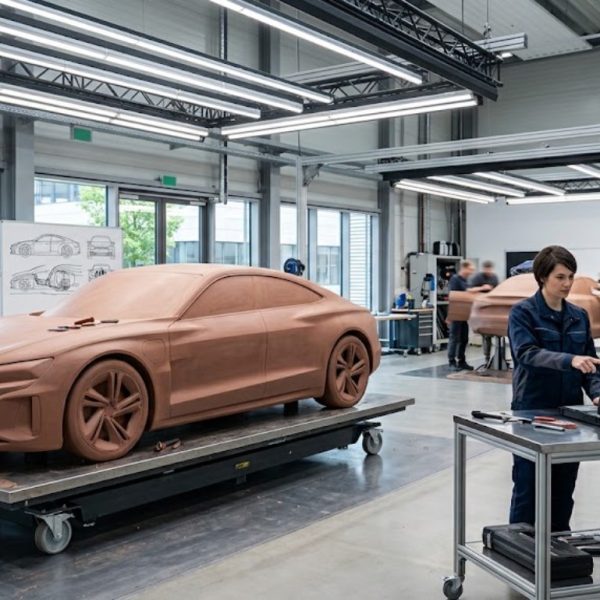
For most of the last century, the reputation of german car companies rested on things you could touch. Panel gaps you could not fit a coin into, engines that sounded expensive, gearboxes that shifted like a bank vault closing. That reputation was earned in metal. The problem facing Wolfsburg, Stuttgart and Munich in 2026 is that the part of the car buyers now judge hardest is the part nobody in those factories was originally trained to build, and it cannot be bought in from a supplier the way a brake caliper can.
Why german car companies were built for hardware
The German model of vehicle development is genuinely brilliant at what it was designed for. A component is specified in enormous detail, tendered to suppliers, validated over years and then frozen. That discipline is why a Golf built in 2015 still feels solid. It is also why software written under the same process arrives late, ships in fragments and needs updating the week after launch.
Software does not sit still long enough to be frozen. It wants continuous release, small teams that own a feature end to end, and a tolerance for shipping something imperfect and improving it in public. None of that maps neatly onto a supplier structure with hundreds of firms each responsible for one control unit. The result, familiar to anyone who followed the launch difficulties at Volkswagen's software division, is a car with eighty computers that struggle to agree with one another.
Why the largest german companies are restructuring
Every major manufacturer has now created a software arm, hired aggressively from outside the industry and started consolidating those eighty control units into a handful of powerful ones. Mercedes has built its own operating system. BMW has taken a more pragmatic line, partnering where it makes sense rather than insisting on building everything in house. Volkswagen has rebuilt its software unit more than once and taken outside investment to do it.
These are not cosmetic reorganisations. They change who holds the valuable part of the vehicle. When the differentiator moves from the engine to the interface, the suppliers who once defined German engineering excellence risk becoming commodity vendors, and the largest german companies in the sector are restructuring precisely to avoid that fate. It is an uncomfortable transition for an industry whose supplier relationships often go back three generations.
The parts that are still world class
None of this means the industry is in decline, whatever the headlines suggest. Germany still builds roughly a fifth of the world's passenger cars by value, and its component makers remain deeply embedded in vehicles wearing badges from every continent. The German Association of the Automotive Industry counts hundreds of thousands of direct jobs and a research spend that dwarfs most national budgets for science. That base does not evaporate because an infotainment update was six months late.
Manufacturing quality, safety engineering and the ability to industrialise a complicated product at volume are genuinely hard, and German firms are still among the best in the world at all three. The historical depth here is considerable, and the automotive industry in Germany has reinvented itself after worse shocks than this one, including the collapse and rebuilding of entire production regions after reunification.
The squeeze on the supplier base
The pain is sharpest one level down. Companies that spent decades perfecting a mechanical component now face customers asking for something they cannot make, while their existing product line shrinks with every electric platform launched. Bosch, Continental and ZF have all reorganised around this, and the smaller family owned firms in Baden Wuerttemberg and Bavaria have far less room to manoeuvre.
Germany’s automotive suppliers are distributed across Central Europe, which is why a software problem in Stuttgart is rarely confined to Stuttgart. Anyone selling into that chain needs a working read on the polish market and how its buyers genuinely evaluate a proposal. The commercial trends there move faster than the industry’s reputation suggests.
German carmakers cannot outsource their software problem partly because the documentation, safety cases and supplier specifications are all deeply entangled with the engineering itself. That is the same reason serious technical translation services are built around subject-matter specialists rather than generalists with a glossary. Understanding the system is what makes the wording defensible.
Some are managing it well by moving into thermal management, power electronics or sensor systems, areas where mechanical expertise still counts for a great deal. Others are being bought, merged or quietly wound down. The next decade will thin out a supplier network that has been remarkably stable since the 1970s, and the firms that survive will look noticeably different from the ones that entered it.
Language is part of the engineering problem
An overlooked complication is that a modern vehicle programme runs across a dozen countries at once. Specifications written in German get implemented in Slovakia, tested in Spain, homologated in China and supported in Portuguese. Every handover is a chance for a requirement to shift meaning slightly, and in software a slight shift in meaning is a defect that surfaces two years later in a recall notice.
Serious suppliers treat this as an engineering discipline rather than an afterthought, which is the argument made well in this piece on automotive translation and the cost of getting it wrong. The same logic applies to customer facing material. A manufacturer that sells in forty markets needs a coherent global domain and translation strategy or it ends up with forty inconsistent versions of its own brand promise.
What to watch over the next three years
Three indicators will tell you how this is going. First, how quickly manufacturers can push an over the air update to an existing fleet, because that is the clearest proof that the architecture consolidation worked. Second, whether the software subsidiaries retain the people they hired, since the German industry has never had to compete with technology employers for talent before. Third, whether Chinese entrants keep gaining ground in Europe on interface quality rather than price alone.
My own guess is that the german car companies come through this in reasonable shape, but slower and smaller than their own forecasts assume. The hardware advantage is real and durable. The software gap is real too, and it is being closed by people who joined the industry in the last five years rather than by anyone who grew up in it.